Comparing FDS audibles 
FDS currently manufactures three audible altimeters, each having unique characteristics, some of which overlap.
Much like a classic audible, SirenAlti produces indications using synthesized tones. One thing that makes it unique is that it contains two speakers instead of one, which enables the production of an extremely rich array of possible sonorities and an extraordinarily high level of customizability. It emits simple (single-tone), dual, and musical alarms, both static (repeating) and dynamic (changing with altitude; excellent for gauging closing rate)—this makes it a good choice for those seeking an extremely capable classic audible with logging capabilities. VoxAlti® and MetaAlti are speaking audibles that share the same case, speaker, and amplifier; both call out altitudes and notifications on the way up and on the way down, and both can emit synthesized alarms as well—MetaAlti approaches SirenAlti’s versatilty in terms of alarms based on synthesized tones though it uses a different speaker technology. MetaAlti additionally offers its USB-C port for a peripheral-vision light (StickyLight M or FlexiLight M—see the light comparison), adding a third altitude-awareness modality—light—to speech and synthesized sound. All three are set via BLE and the FDS Altis app, hold up to five presets selectable on the device itself, log jumps for use with FDS Logbook, and carry an IP67 water ingress protection rating. They all include a versatile BLE-based Tactical Mode for firefighting or military operations.
Much like a classic audible, SirenAlti produces indications using synthesized tones. One thing that makes it unique is that it contains two speakers instead of one, which enables the production of an extremely rich array of possible sonorities and an extraordinarily high level of customizability. It emits simple (single-tone), dual, and musical alarms, both static (repeating) and dynamic (changing with altitude; excellent for gauging closing rate)—this makes it a good choice for those seeking an extremely capable classic audible with logging capabilities. VoxAlti® and MetaAlti are speaking audibles that share the same case, speaker, and amplifier; both call out altitudes and notifications on the way up and on the way down, and both can emit synthesized alarms as well—MetaAlti approaches SirenAlti’s versatilty in terms of alarms based on synthesized tones though it uses a different speaker technology. MetaAlti additionally offers its USB-C port for a peripheral-vision light (StickyLight M or FlexiLight M—see the light comparison), adding a third altitude-awareness modality—light—to speech and synthesized sound. All three are set via BLE and the FDS Altis app, hold up to five presets selectable on the device itself, log jumps for use with FDS Logbook, and carry an IP67 water ingress protection rating. They all include a versatile BLE-based Tactical Mode for firefighting or military operations.
Altitude indication technologies
The various methods of altitude indication work in concert, synergistically approaching the problem of altitude awareness from different angles.
The main advantage of the classic audible (also called a dytter, which essentially
means beeper, or what FDS refers to as SonoAlti
technology) is that it is the most jarring and attention-grabbing of all possible altitude
alerts, particularly in freefall, due to the psychoacoustic characteristics of the alarms it
produces. It functions much like a fire alarm near breakoff time, pull altitude, or
decision altitude. The main disadvantage is that you tend to wait for it to sound—jumpers
do not typically pay attention to an alarm audible until around breakoff and
lower. SirenAlti uses purely synthesized tones
like a classic audible but has been rethought from the ground up: its two speakers enable the production of unusually diverse
array of possible sounds and a level of customization unmatched by other classic audibles.
The speaking audible (VoxAlti technology) is newer to the sport and is growing fast in popularity. There is not many better things for the development of altitude awareness than having the altitude actually called out for you, both on the way up and on the way down at regular intervals. This teaches you to associate an altitude picture with a number, and in many cases it practically replaces your wrist-mounted altimeter—in some respects it has advantages over such altimeters. These devices can also tell you things like "pull" or "seatbelts." The primary disadvantage is that speech is not as loud or attention-getting as an alarm—which is why VoxAlti and MetaAlti can emit synthesized alarms as well.
Our patented ColorAlti® technology provides truly constant, granular input of altitude in real time through light in peripheral vision: rather than waiting to hear a callout or an alarm, the input is (optionally) continually there. MetaAlti’s light port (USB-C) brings this modality to a speaking audible, uniting speech, synthesized sound, and light in a single device—truly a first of its kind.
While all three of these devices can be used on just about any type of skydive, what we recommend depends on a few factors besides simple personal preference. The first is simply the type of helmet being used: very loud helmets—or helmets where the audible pockets do not line up well with the ear canal (e.g. the Kiss helmet)—are less suitable for speaking audibles and favor SirenAlti. The next is the types of jumps one does: on jumps where it isn’t ideal to look at a wrist-mounted altimeter (tracking, freeflying, wingsuiting, camera flying, etc.), the constant input afforded by MetaAlti’s peripheral-vision light is useful in such situations—and in the highest-speed disciplines, light remains perceivable where any audible fights increasing masking from wind noise. For those who are hard of hearing, we always recommend ColorAlti® technology; among the audibles, that means MetaAlti with a light. These are only recommendations, however, and we are always glad to discuss individual cases if you call us up or send us an e-mail.
Comparison chart
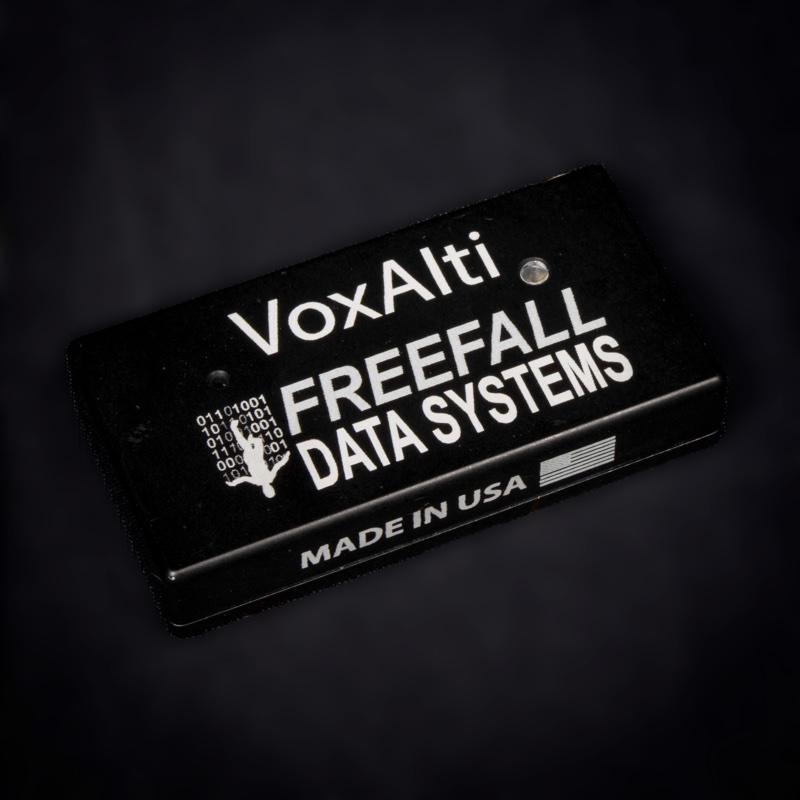
VoxAlti
FDS012
$399
- Synthesized tones
- Speech
- Peripheral-vision LED
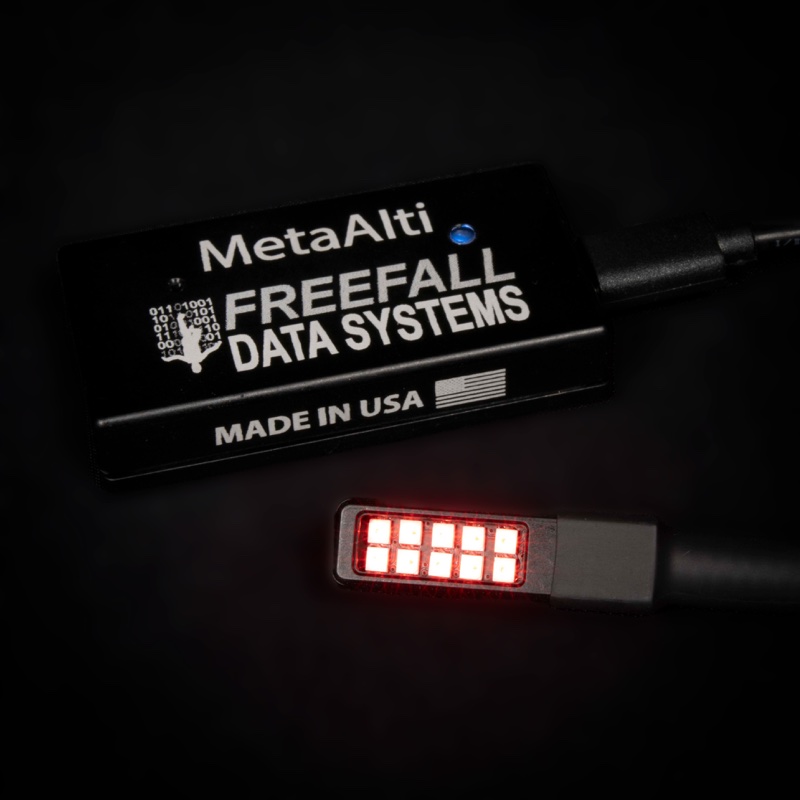
MetaAlti
FDS013
From $409
- Synthesized tones
- Speech
- Peripheral-vision LED
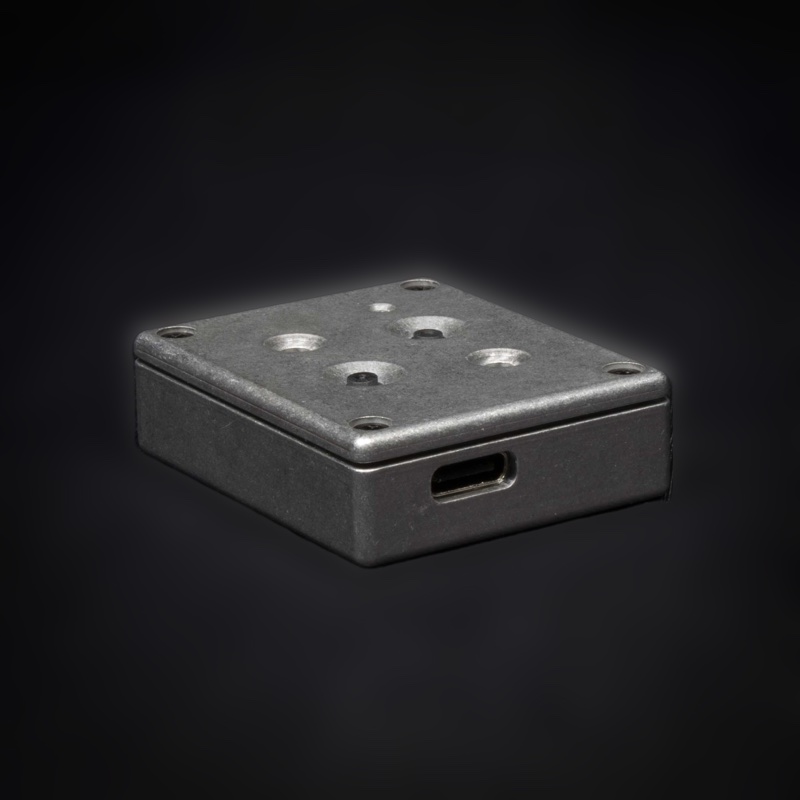
SirenAlti
FDS014
$379
- Synthesized tones
- Speech
- Peripheral-vision LED
VoxAlti
MetaAlti
SirenAlti
Release date
February 26, 2026
August 14, 2026
September 21, 2026
Price
$399
From $409
$379
Dimensions
61.0 × 32.0 × 12.4 mm
61.0 × 32.0 × 12.4 mm
42.0 × 35.0 × 12.6 mm
Volume
24.2 cm3
24.2 cm3
18.5 cm3
Weight
39.3 g
38.6 g (without light)
30.3 g
Speaker driver technology
dynamic
dynamic
dual piezo
Battery life
4 months (~50 jumps)
4 months (~100 jumps)
3 months (~80 jumps)
Number of different sounds
101
153
90
Add your own sounds
—
MP3
—
Custom preset nicknames
—
—
Vertical descent speed tracking
—
Firmware updates
via Wi-Fi
via USB
via USB
Common to each
Bluetooth iOS/Android app
Five presets, selectable on the device
Unlimited alarms per preset
Logs ~200 jumps
Works with FDS Logbook
One year of FDS Logbook included
Wingsuit & swoop modes
Tactical Mode
Landing-zone elevation offset
Adjustable loudness
Low-battery warning
Always on
Rechargeable
USB-C charging & data cable
Real-time clock/calendar
6061 anodized aluminum case
IP67 water ingress protection
−5,900 to 30,000 ft MSL
Two-year warranty
Made in the USA